

Introduction
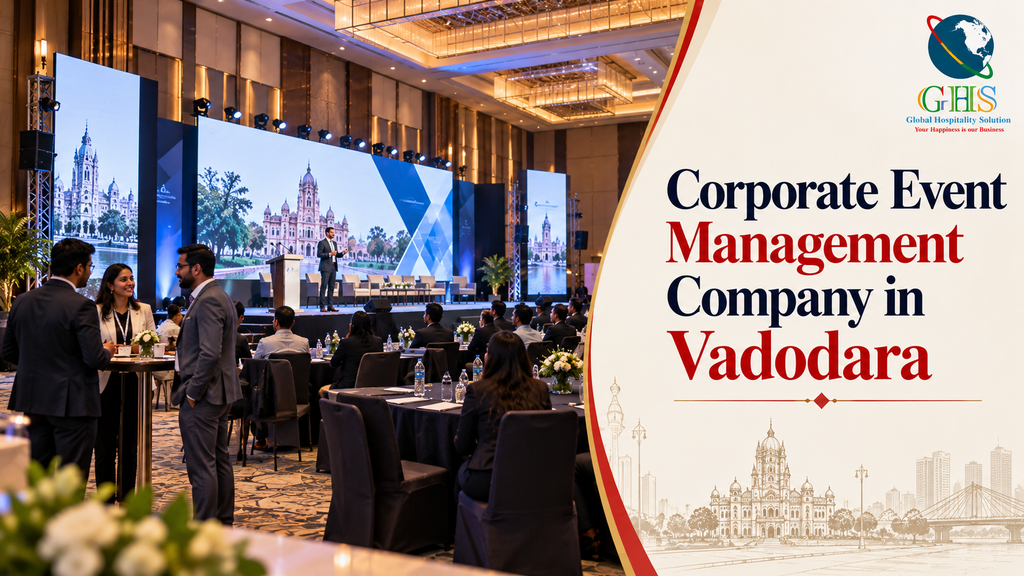
Corporate events have become an important part of how businesses communicate, build professional relationships, introduce new initiatives, and strengthen their organisational culture. From annual conferences and product launches to dealer meets, employee engagement programmes, exhibitions, and leadership gatherings, each event serves a distinct business purpose. Its success depends not only on the venue or presentation but also on how effectively the entire experience is planned and executed.
Vadodara offers a distinctive setting for corporate events in Gujarat. The city has a well-established industrial base spanning engineering, chemicals, petrochemicals, pharmaceuticals, manufacturing, and power-sector equipment. Its educational institutions, business communities, transport connections, and expanding urban infrastructure also support a range of professional gatherings. These characteristics create opportunities for companies to organise events that bring together employees, clients, distributors, suppliers, industry professionals, and business partners.
However, organising a corporate event requires more than arranging a venue and sending invitations. Budget management, delegate movement, technical production, accommodation, catering, scheduling, and contingency planning must work together. A corporate event management company in Vadodara can help businesses coordinate these elements through a structured approach, allowing internal teams to concentrate on the event’s objectives and outcomes.
Understanding the planning process, local considerations, and operational requirements helps organisations make better decisions when preparing their next corporate event.
Why Vadodara Is a Strategic Location for Corporate Events
An industrial ecosystem that supports business gatherings
Vadodara’s industrial character makes it relevant for corporate meetings, technical conferences, supplier interactions, product demonstrations, dealer conferences, and business networking programmes. Companies operating across engineering, pharmaceuticals, chemicals, manufacturing, and related sectors frequently need opportunities to communicate with customers, employees, channel partners, and industry stakeholders.
The requirements of these events can differ considerably. A technical conference may need presentation systems, panel discussion facilities, and dedicated spaces for demonstrations. A distributor meet may prioritise networking, product displays, hospitality, and structured business sessions. An employee gathering may focus more heavily on engagement, recognition, and internal communication.
Planning an event around the needs of its participants and the industry involved helps ensure that the format, venue, and programme support the intended business objective.
Connectivity and regional accessibility
Vadodara is connected to major commercial centres through rail and road networks, including the important Mumbai–Delhi transport corridor. Its airport also provides another travel option for eligible routes and schedules. These connections can be useful when an event brings together participants from different parts of Gujarat or other Indian cities.
Nevertheless, accessibility should be evaluated from the perspective of actual attendees rather than the city alone. The distance between the airport or railway station and the venue, local traffic conditions, hotel locations, event timings, and onward transport arrangements can influence the delegate experience.
For multi-day programmes, accommodation and venue selection should be considered together. Choosing a venue that appears suitable in isolation may create unnecessary travel for attendees if their hotels, meeting rooms, and networking locations are widely separated.
A balance of professional infrastructure and local character
Vadodara combines a modern industrial environment with a recognised cultural heritage. This provides flexibility for organisations planning formal business programmes as well as employee engagement events, networking dinners, and corporate celebrations.
A company can structure its programme around focused business sessions during the day and a suitable networking or hospitality experience later. The choice should reflect the audience, company culture, event objectives, and available time rather than relying on local attractions as a substitute for a well-designed agenda.
What a Corporate Event Management Company in Vadodara Should Handle
Event objectives and programme development
Every successful corporate event begins with a clear purpose. Before selecting a venue or finalising suppliers, the organising team should establish what the event needs to achieve.
A leadership conference may be designed to communicate business priorities and align senior teams. A product launch may focus on demonstrating features, engaging distributors, or generating media interest. A dealer conference may combine performance reviews, product education, recognition, and relationship building.
These objectives influence the event format, participant profile, duration, venue layout, speaker requirements, communication plan, and budget. An experienced event planner can translate the brief into a practical programme with defined responsibilities, timelines, and operational requirements.
The planning stage should also establish measurable indicators of success. These might include attendance, participant feedback, session participation, scheduled business meetings, product demonstrations completed, or internal engagement outcomes. The appropriate measures depend on the purpose of the event.
Venue selection and space planning
Venue selection affects the atmosphere, accessibility, operational efficiency, and overall cost of a corporate event. The decision should account for expected attendance, seating arrangements, stage requirements, catering, parking, technical infrastructure, and the movement of participants between sessions.
A conference involving presentations and panel discussions may require theatre-style seating, a stage, microphones, projection facilities, and spaces for registration and refreshments. A networking event may benefit from a more flexible layout with areas for conversation and informal interaction. An exhibition or product showcase may require dedicated display zones, visitor circulation, storage, and access for installation teams.
Venue capacity should be assessed using the intended layout rather than the maximum occupancy stated in promotional material. A room that accommodates a certain number of people in a basic seating arrangement may offer less usable space when a stage, screens, exhibition counters, or catering stations are introduced.
For businesses comparing venue options, venue selection and banquet packages can be considered as part of the broader planning process.
Audio-visual production and technical coordination
Audio-visual systems influence how clearly an event communicates its message. Poor sound, unreadable presentations, inadequate lighting, or unreliable connectivity can undermine an otherwise well-planned programme.
Technical planning should begin with the event format and content. Requirements may include microphones, speakers, projection screens or LED displays, stage lighting, presentation computers, video playback, recording, and live-streaming facilities. Hybrid events may also need a suitable internet connection, remote-speaker integration, and support for online participants.
Equipment specifications should be matched to the room dimensions, audience size, ambient lighting, and programme complexity. A large display may not automatically provide good visibility if its placement or viewing angle is unsuitable. Similarly, microphones and speakers need to be configured to minimise feedback and ensure clear speech throughout the venue.
Technical rehearsals are particularly important when several speakers, videos, presentations, or live demonstrations are involved. Testing equipment before attendees arrive provides time to identify compatibility issues, confirm presentation files, and coordinate transitions between sessions.
Businesses organising conferences, launches, or complex stage programmes can explore audio-visual production solutions when assessing their technical requirements.
Managing the Operational Details Behind a Successful Event
Delegate registration and communication
Registration is often the first direct interaction attendees have with an event. Unclear invitations, incomplete registration information, long queues, or confusing entry procedures can create friction before the programme begins.
A structured registration process should establish the information required from participants, confirmation procedures, arrival instructions, identification requirements where applicable, and arrangements for last-minute changes. Larger gatherings may benefit from pre-registration, digital attendee lists, separate counters for different participant groups, and clear signage.
Communication should continue after registration. Attendees may need details about the venue address, parking, transport, agenda, dress requirements, accommodation, and contact information for event assistance. Timely updates are especially important when schedules or logistical arrangements change.
For conferences with multiple sessions, an agenda that clearly identifies timings, room locations, speakers, and breaks can reduce confusion and help participants manage their time.
Accommodation, transport, and hospitality
Accommodation becomes a major consideration when participants travel from outside Vadodara or when an event spans several days. Hotel selection should account for the budget, room availability, distance from the venue, check-in requirements, meal arrangements, accessibility, and the needs of senior delegates or speakers.
Transport planning should consider arrival patterns rather than relying on a single general pickup schedule. Participants arriving at different times may require separate arrangements, while a large group travelling together may need coordinated transfers. Buffer time should be included for traffic, registration, and movement between locations.
Hospitality also includes dietary requirements, drinking water, refreshments, meal timings, signage, and support for attendees who need assistance. These details may seem secondary to the main programme, but together they shape how organised and welcoming the event feels.
Companies coordinating national or international delegates can review hotel accommodation services while developing their event logistics.
Vendor coordination and contingency planning
Corporate events often involve several suppliers, including venues, caterers, decorators, technical teams, printers, transport providers, photographers, and security personnel. When these suppliers work to separate schedules without a common coordination plan, delays and conflicting requirements can arise.
A consolidated event schedule should identify setup times, delivery deadlines, rehearsal periods, access arrangements, approval responsibilities, and programme milestones. Each supplier should understand the scope of work, the relevant contact person, and the procedure for handling changes.
Contingency planning is equally important. Backup microphones, duplicate presentation files, alternative transport arrangements, additional registration materials, and emergency contact details can help reduce disruption. Outdoor events may require weather-related alternatives, while large gatherings should have appropriate safety, medical assistance, and evacuation arrangements based on the venue and event requirements.
A practical contingency plan identifies likely risks, assigns responsibility, and establishes clear response procedures. It should be prepared before the event rather than improvised when a problem occurs.
Budget Planning: Allocating Resources Where They Matter
A corporate event budget should reflect the event’s objectives, expected attendance, operational complexity, and quality requirements. Venue rental is only one component. Production, catering, accommodation, transport, branding, staffing, registrations, and other services can significantly influence the final cost.
An effective budget separates essential requirements from optional enhancements. For example, clear sound, reliable presentation equipment, accessible seating, and appropriate safety arrangements may be fundamental to a conference. Additional decorative installations or elaborate entertainment may be considered only after the core requirements have been covered.
Cost estimates should also specify what is included and excluded. Venue quotations may differ in their treatment of taxes, service charges, furniture, electricity, technical equipment, setup time, and overtime. Comparing only the headline price can therefore produce misleading conclusions.
A contingency allowance can help manage unforeseen expenses, although its size should be based on the event’s risk profile and organisational policies rather than an arbitrary universal percentage. Changes in attendance, last-minute production requirements, or transport delays can all affect costs.
Financial control should continue throughout planning. Recording commitments, tracking actual expenditure, and obtaining approval for scope changes help prevent avoidable budget overruns.
How to Evaluate a Corporate Event Planner in Vadodara
Selecting an event management partner requires an assessment of operational capability, not just the quality of previous event photographs. Businesses should examine whether the planner understands the event objective, can develop a realistic execution plan, and has a clear approach to vendor coordination, budget control, technical requirements, and risk management.
Relevant experience is particularly valuable. A company experienced in conferences may understand delegate registration, speaker management, presentation schedules, and technical rehearsals. A planner handling exhibitions may be more familiar with stall layouts, exhibitor movement, installation schedules, and visitor management. The right partner should demonstrate capabilities that match the event being planned.
Communication and accountability also matter. The proposal should clearly define the scope of services, deliverables, responsibilities, payment terms, cancellation conditions, and arrangements for changes. Businesses should establish who will manage the event on-site and how decisions will be handled if the programme changes.
A useful evaluation process includes a detailed discussion of the brief, an itemised proposal, relevant examples of comparable work, and a review of the proposed timeline. Companies should also clarify which services are delivered directly and which depend on external vendors.
Global Hospitality Solutions supports corporate event planning and related hospitality requirements, including coordination of venues, accommodation, and production services. The suitability of any event partner should ultimately be judged by how well its capabilities align with the organisation’s requirements.
Measuring Event Success Beyond Attendance
Attendance is an important measure, but it does not reveal whether an event achieved its intended purpose. A well-attended conference may still fall short if participants cannot understand the presentations, networking opportunities are limited, or the programme fails to address their needs.
Evaluation should begin with the objectives established during planning. A training programme may assess participant learning and feedback. A dealer meet may track participation in product sessions and follow-up business discussions. An internal conference may measure employee feedback, understanding of organisational priorities, or engagement with key announcements.
Operational indicators are also useful. Registration waiting times, session punctuality, technical interruptions, catering feedback, and transport coordination can reveal areas for improvement. Comparing the planned budget with final expenditure helps assess financial control.
Feedback should be collected while the experience is still fresh, using short surveys, structured discussions, or feedback from department representatives. The findings can then inform future event formats, venue decisions, communication methods, and supplier selection.
Treating each event as a source of operational learning helps organisations improve consistency rather than starting the planning process from scratch every time.
Conclusion
Corporate events in Vadodara can serve a wide range of business purposes, from industrial networking and technical conferences to employee engagement, product launches, and leadership meetings. Their success depends on aligning the event format with its objectives and coordinating the venue, production, hospitality, transport, budget, and participant experience.
A structured planning process helps businesses make informed decisions, anticipate operational challenges, and use resources more effectively. Choosing an event management partner with relevant experience, transparent processes, and clear accountability can further strengthen execution.
As Vadodara continues to serve industrial, educational, and commercial communities, well-planned corporate events can provide valuable opportunities for communication, collaboration, and professional relationships. The strongest results come from treating event management as an integrated business function, with every operational decision supporting the purpose of the gathering.
Frequently Asked Questions
1. What does a corporate event management company in Vadodara do?
A corporate event management company can coordinate event planning, venue selection, scheduling, vendor management, audio-visual production, registration, hospitality, transport, and on-site execution. The exact scope depends on the event brief and the services agreed upon.
2. Which corporate events can be organised in Vadodara?
Common formats include business conferences, dealer meets, product launches, annual meetings, employee engagement programmes, award ceremonies, training sessions, exhibitions, networking events, and leadership gatherings. Venue and production requirements vary according to the audience and event objectives.
3. How early should a company begin planning a corporate event?
The planning timeline depends on the event’s scale, venue availability, guest profile, and technical complexity. Smaller meetings may require less preparation, while large conferences, exhibitions, and multi-day programmes generally benefit from several months of planning. Early preparation provides more flexibility in venue selection, supplier coordination, and budgeting.
4. How is the budget for a corporate event determined?
The budget depends on attendance, venue, catering, production, accommodation, transport, branding, staffing, and other operational requirements. Businesses should request itemised estimates and clarify taxes, service charges, exclusions, cancellation terms, and potential additional costs before confirming suppliers.
5. What should businesses consider when selecting an event venue in Vadodara?
Important factors include location, attendee accessibility, seating capacity, room layout, parking, technical infrastructure, catering, accessibility, and proximity to accommodation. The venue should be evaluated against the actual event format rather than capacity alone.
6. Why is audio-visual planning important for corporate events?
Audio-visual planning supports clear presentations, effective communication, audience visibility, and smooth programme transitions. Equipment should match the venue, audience size, and event format, with technical rehearsals scheduled to identify issues before the event begins.
7. Can corporate event management include hotel accommodation and transportation?
Yes. Depending on the agreed scope, event planning may include hotel coordination, delegate transfers, arrival schedules, hospitality arrangements, and communication with participants. Coordinating these services with the event agenda helps reduce logistical difficulties.
8. How can a business measure the success of a corporate event?
Success can be evaluated through attendance, participant feedback, session engagement, achievement of event objectives, operational performance, and budget adherence. The most useful measures are those established before the event and aligned with its intended business outcomes.